


War of Dots

Car Eats Car: Winter Adventure
Bomber Royale

Color Switch

Stacktris

Thumb Fighter
War of Dots Unblocked












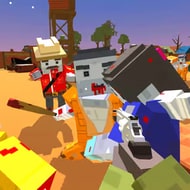
How much does a game need to explain before the fighting makes sense? Zombie Siege Outbreak answers with almost nothing — you’re handed a weapon, a fixed position, and a growing crowd of zombies, and the rest is entirely up to how well you manage ammo, angles, and nerve.
The structure is straightforward and stays that way throughout: defend a position against escalating waves, using WASD to move, the left mouse button to fire, right-click to zoom in for more precise shots, Q and E to switch between weapons, R to reload, and P if you need to step away mid-fight. There’s no base-building layer and no branching mission structure — it’s a straight survival test where the main variable is how well you manage your position as the crowd thickens.
What makes the format work despite its simplicity is the escalation itself. Early waves are forgiving enough to let you get comfortable with switching weapons and managing reloads under pressure, but the crowd size and pace both increase steadily enough that autopilot play stops being viable well before the game is over.
Because reloading has a real cost — a window where you can’t fire back — the biggest skill Zombie Siege Outbreak actually tests isn’t aim, it’s timing: knowing when a lull in the crowd is safe enough to reload versus when holding fire a few extra seconds is the safer call. Zooming in with right-click helps land precise shots at range, but it also narrows your field of view at exactly the moment zombies might be closing in from an angle you’re not currently watching, which makes the zoom itself a genuine risk-reward decision rather than an upgrade to accuracy with no downside.
Switching weapons with Q and E matters most in the moments right after a lull, when the next wave’s composition isn’t yet clear — having a weapon suited to close-range chaos ready to switch into, rather than being caught mid-reload on something better suited to range, is the difference between a clean wave and a scramble.
The pause option on P is a small but genuinely useful inclusion for a game built around sustained pressure rather than short bursts — since waves don’t politely wait for you to reposition mentally, being able to step back for a moment without losing progress mid-fight is a detail that matters more here than in a game with more natural breathing room built into its pacing.
It’s worth setting expectations honestly here: this isn’t a game built around memorable named threats, a branching story, or a roster of distinct zombie types with their own identities. What Zombie Siege Outbreak offers is the core tension of a fixed-position wave defense, executed plainly, without much decoration layered on top. That’s not a knock on it exactly — the controls are responsive and the escalation curve is real — but anyone expecting deep lore or standout set-piece moments should adjust expectations toward “solid, straightforward survival test” rather than anything more elaborate.
If a no-frills, position-holding shooter is what you’re in the mood for, the controls translate cleanly and the pressure builds honestly wave over wave. If you’re looking for a zombie game with a cast of named threats and a story pulling you forward, this isn’t built to deliver that, and it doesn’t pretend otherwise.
Zombie Siege Outbreak succeeds by not overcomplicating what it’s actually offering — reload timing, zoom-in precision, and the steady pressure of a crowd that never really stops coming, held together by controls simple enough to learn in the first wave and demanding enough to matter in every wave after it.
