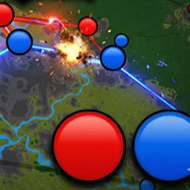
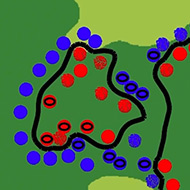
You line up a shot from just outside the box in FIFA Soccer, aim for the far corner, and the goalkeeper’s positioning in that split second decides whether the next few minutes go your way or start feeling like an uphill match. It’s a simple arcade soccer setup, and it earns most of its tension from exactly that kind of small, repeated decision.
FIFA Soccer Keeps Its Controls Deliberately Simple
There’s no deep stat-management layer or transfer market here — FIFA Soccer sticks to on-field basics: passing, shooting, and positioning your side well enough to create a clean shot on goal. What beginners get wrong is relying on straight, direct shots from distance instead of working the ball toward a tighter angle first; the goalkeeper reacts far more reliably to shots taken from further out; a shot worked closer in, even if it takes an extra pass or two, connects far more often than a hopeful strike from range.
Defense gets less attention from new players than it deserves. It’s tempting to treat every possession as an attacking opportunity, but games are just as often lost by leaving space open on the counter as they are won by finishing chances. Matches that stay close tend to be decided by whichever side made fewer defensive mistakes, not by whoever took more shots.
Reading FIFA Soccer’s Pace Instead of Forcing Chances
Because FIFA Soccer moves at an arcade pace rather than a slow, possession-heavy rhythm, it’s easy to force shots the moment a gap in the defense opens, even when a better opportunity is one pass away. Players who slow down for that one extra pass, rather than shooting the instant a lane appears, tend to convert a noticeably higher share of their chances over a full match.
What’s the most common mistake new players make?
Shooting from too far out. A shot worked closer to goal, even at the cost of an extra pass, beats a hopeful strike from distance far more often than it looks like it should.
Does defense matter as much as scoring?
Yes — close matches in FIFA Soccer are usually decided by defensive mistakes as much as by finishing, so leaving space open on a counterattack is often costlier than missing a chance at the other end.
How much does positioning matter compared to raw reaction speed?
More than most new players assume. Getting a player into a better angle before the shot, rather than relying on reaction speed alone to beat the goalkeeper, is consistently what separates a converted chance from a wasted one.
None of that complexity is hidden behind menus or stat screens — FIFA Soccer keeps its entire skill curve on the pitch, in the gap between a shot taken a beat too early and one taken after that one extra pass makes all the difference.