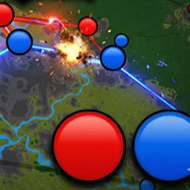
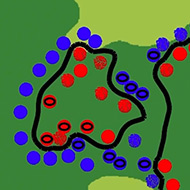
A thorn ball does not bounce the way you expect it to the first time you launch one. In Thorns and Balloons, that unpredictability is not a flaw to work around — it is the entire puzzle, and every level is really asking you to predict exactly how a spiked ball behaves once real physics takes over from your aim.
| Genre |
Physics puzzle |
| Objective |
Pop every balloon before the timer runs out |
| Time limit |
30 seconds per level |
| Core mechanic |
Angle and strength-based launch with wall-bounce physics |
Aiming Thorns and Balloons Is Two Decisions, Not One
Every launch in Thorns and Balloons asks for two separate decisions at once: how hard you pull back to set strength, and which diagonal you swipe to set angle. Beginners tend to focus entirely on strength, cranking it up to cover distance, and end up overshooting balloons that a gentler, better-angled shot would have caught cleanly on the first bounce.
The wall-bounce is where the real skill lives. Because the thorn ball reacts to gravity and rebounds off walls with genuine physics rather than a scripted path, the same strength-and-angle combination can produce a completely different result depending on where the first wall contact happens. Players who start deliberately aiming for a wall first, rather than a direct line to the nearest balloon, start clearing levels with shots to spare instead of scraping by right at the 30-second mark.
Chain Reactions Are the Whole Reason to Get Good
Some levels in Thorns and Balloons are built specifically so a single well-placed shot can trigger a chain of pops rather than one — the thorn ball catching a cluster on the way through instead of stopping at the first balloon it touches. This is the one honest divisive point in how players talk about the game: pulling off a clean chain feels genuinely earned, but a few levels seem to want a very specific bounce angle to chain at all, and players who haven’t found that angle yet can burn through the timer on layouts that otherwise look simple.
Once the pattern clicks — reading a wall’s angle the way you’d read a pool table rather than aiming straight at a target — the 30-second limit stops feeling like pressure and starts feeling generous, because a well-read chain shot clears half a level’s balloons in a single throw.
What’s the fastest way to improve at Thorns and Balloons?
Practice reading walls before balloons. Most levels that feel impossible on a direct shot open up immediately once you aim for a wall bounce instead of a straight line, since the rebound angle usually lines up with clusters the direct path can’t reach.
Why does the same shot sometimes miss and sometimes chain perfectly?
Because the thorn ball’s trajectory depends on exact launch angle and strength interacting with gravity and wall contact, tiny differences in your swipe change where the first bounce lands — which is why two visually similar shots can produce very different chains.
Thorns and Balloons rewards exactly the kind of patience that its 30-second timer seems to punish: the players who slow down and read the walls before every launch are consistently the ones clearing levels with time left on the clock, not the ones who keep firing straight at the nearest balloon.