

War of Dots
Car Eats Car: Winter Adventure
Bomber Royale

Color Switch

Stacktris

Thumb Fighter
War of Dots Unblocked










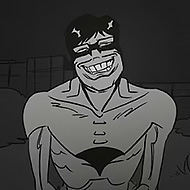
You’re not alone anymore, and that’s the problem. Yes, I’m Alone 2 opens right where a very different kind of story usually ends — after the transformation, after the “good” outcome of whatever came before, dropping you into a house that used to be familiar and now answers to someone else’s rules. Every conversation from here reads like a negotiation over how much of yourself you’re willing to keep.
| Genre | Visual Novel / Psychological Horror |
| Core Loop | Branching dialogue choices across a house full of watchful company |
| Endings | 19 distinct outcomes across good, bad, and hidden paths |
| Replay Value | Very high — most endings require deliberately different choice patterns |
The story picks up after the protagonist has already joined the visitor from the previous game, and that single fact reframes everything that follows. You’re not fighting to escape a threat from the outside; you’re negotiating your identity from the inside, deciding scene by scene how much of your old self to hold onto around a household that now includes the Pale Visitor and the strange, quieter presence of Coat Guy. Nothing here plays like a jump-scare gauntlet — it’s slower, more conversational, and more uncomfortable for it.
Every choice is framed as something small — agree, deflect, push back, stay quiet — but the game is tracking those small choices against each other across the whole runtime. A single scene rarely locks you into an ending on its own; it’s the pattern across dozens of moments that eventually resolves into one of nineteen distinct outcomes, which makes a first playthrough feel less like following a plot and more like slowly discovering what kind of person you decided to become without quite meaning to.
The Pale Visitor is the game’s central figure, and the writing treats him less like a monster to be avoided and more like a fixture you now live alongside — unsettling precisely because he isn’t hiding what he is. Scenes built around him tend to hinge on tone as much as content: matching his calm, going along with a request, or refusing outright all read as meaningfully different responses rather than a binary right-or-wrong choice.
Community discussion around this exact figure is consistently the most active part of the game’s comment threads, with players comparing notes on which of his scenes tip toward a good ending and which quietly lock in something worse. That disagreement itself is a good sign the writing isn’t telegraphing its outcomes — the “safe-sounding” choice with the Pale Visitor isn’t always the one that leads anywhere good.
Where the Pale Visitor dominates a scene by presence, Coat Guy works the opposite way — a quieter, easier-to-overlook character whose scenes matter more than their length suggests. Players consistently point to choices involving Coat Guy as the ones that unlock some of the story’s less obvious endings, particularly moments built around trust rather than confrontation.
Nineteen endings is a lot for a game built around dialogue rather than a branching map, and the split — nine bad, seven good, two described by players as brutal, and one hidden ending players still trade tips on — means no single “good playthrough” mindset covers everything. Players who set out to find every ending report that the hardest ones aren’t the darkest bad endings, which tend to follow from consistently hostile or careless choices, but the specific good endings that require threading a very particular tone across both the Pale Visitor and Coat Guy simultaneously.
The hidden ending in particular has become something of a community project — it isn’t hinted at directly in dialogue, and players comparing notes across comment threads and video walkthroughs is how most of the requirements for it have been pieced together rather than discovered solo.
The most common reaction across player comments isn’t about difficulty, it’s about craft — the art, the pacing of reveals, and the way ordinary conversational choices carry more weight than they initially seem to. A number of players specifically call out finishing one ending and immediately wanting to see how a differently-toned playthrough would have gone, which for a dialogue-only game is a fair measure of whether the branching actually matters or is cosmetic.
The honest complaint that shows up almost as often as the praise: some players find the sheer number of endings intimidating rather than inviting, unsure which of their early choices already narrowed their options. That’s a real trade-off of a story this branching — the freedom to land almost anywhere also means a first playthrough can’t realistically aim for anything specific without some guesswork.
There are nineteen endings in total, split across bad, good, brutal, and one hidden outcome, and they diverge meaningfully rather than just swapping a line of closing dialogue — the tone, and what happens to you and the Pale Visitor specifically, changes considerably between them.
He matters directly. Several of the harder-to-reach endings are gated behind consistently gentle or trusting choices with Coat Guy specifically, rather than through anything you say to the Pale Visitor alone.
Not reliably. Because the game tracks tonal consistency across many small choices rather than one obvious decision point, players report that even a deliberately careful first playthrough often lands on an unexpected outcome — reaching a specific good ending on purpose usually takes at least one repeat run informed by what happened the first time.
Yes, I’m Alone 2 turns a house, a handful of ongoing conversations, and two very different companions in the Pale Visitor and Coat Guy into something with far more replay value than its quiet, dialogue-only presentation suggests — the nineteen ways it can end are proof the small choices along the way were never actually small.
