

War of Dots

Car Eats Car: Winter Adventure
Bomber Royale

Color Switch
Stacktris

Thumb Fighter
War of Dots Unblocked









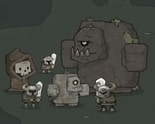
A single bone doesn’t look like much sitting in an empty graveyard plot. A thousand of them, converted into skeletons, warriors, and wizards standing in ranks behind you, is a different story entirely — and that transformation from nothing to army is the entire arc of Right Click to Necromance.
| Genre | Incremental / clicker |
| Currency | Bones |
| Units | Skeletons, warriors, wizards |
| Core loop | Right-click to raise, spend bones to expand the army |
The first stretch of Right Click to Necromance is deliberately slow — every bone earned comes from direct clicking, and the ranks of skeletons you’re building feel thin compared to what community screenshots of late-game armies show. What beginners get wrong is treating this stretch as filler to rush through; the early bone-spending decisions set the pace for how quickly the rest of the run compounds, and spending too early on flashy units instead of raising basic skeleton numbers first tends to slow the whole climb down.
Warriors and wizards cost more bones than basic skeletons but contribute more per unit once unlocked, which creates the genre’s classic tension: spend now on cheaper numbers, or wait and spend on stronger units that pay off later. Right Click to Necromance doesn’t hide this trade-off — it’s the core decision players are making constantly, just at different scales as the run progresses.
An army composed entirely of basic skeletons generates bones differently than a mixed force including wizards, and players who ignore unit variety in favor of raw skeleton count often hit a wall where their bone income plateaus. Wizards specifically tend to unlock more efficient bone generation once a player has enough warriors backing them up to make the investment worthwhile — a detail that’s easy to miss if the wizard unit is dismissed early as too expensive to bother with.
Community discussion around Right Click to Necromance tends to split on optimal strategy: some players favor rushing wizard unlocks as early as bone income allows, while others argue a slower, warrior-heavy build produces a more stable mid-game. Neither is clearly wrong — it depends on how much a player values early flexibility versus a steadier compounding curve.
Is it better to click manually or wait for passive bone generation? Manual clicking matters most early, before passive generation from your army outpaces what direct clicking alone can produce — after that point, clicking becomes a minor supplement rather than the main source of bones. Does unit order matter when building an army? Yes, since skeletons unlocked early feed the bone economy that eventually makes warriors and wizards affordable, so skipping straight to expensive units usually backfires. How long before the game’s pace actually feels rewarding? Most players report the shift happening once passive generation from a first solid batch of skeletons starts outpacing manual clicking, at which point the whole loop stops feeling like a grind and starts feeling like genuine progress.
What keeps Right Click to Necromance from feeling like a repetitive numbers-only exercise is that early, slow stretch paying off so visibly — watching a graveyard go from a single clicked bone to a full standing army of skeletons, warriors, and wizards is a satisfying enough arc that the grind leading up to it stops mattering much in hindsight.
