
War of Dots
Car Eats Car: Winter Adventure
Bomber Royale

Color Switch
Stacktris
Thumb Fighter
War of Dots Unblocked



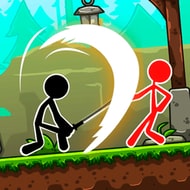






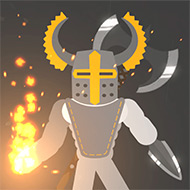
What happens when you grab an opponent’s weapon mid-swing instead of blocking it? In Ragdoll Hit, the spacebar grab is the mechanic that separates players who are still button-mashing from players who are actually fighting — because a grabbed weapon stops being a threat, and the stickman holding it just lost their whole game plan.
| Genre | Physics-based stickman fighting |
| Modes | Single-player, two-player, survival |
| Levels | 30+, including eight boss fights |
| Core mechanic | Ragdoll physics with a grab command |
Every punch, kick, and fall in Ragdoll Hit runs through the same gravity-and-momentum physics, which is why the game reads as chaotic slapstick on a first look. What beginners get wrong is assuming that chaos means the fights are unwinnable, when the grab command is a direct answer to almost every threat the game throws at you — an incoming weapon, an outgoing arm, even an opponent’s head can all be seized and turned against them.
Switching weapons changes far more than damage numbers. A baseball bat rewards a slower, committed swing with real reach, while trading it for a scythe demands tighter timing and different spacing entirely — players who keep their old bat-timing after picking up a scythe usually find themselves grabbed before their swing even lands.
By the time a run reaches the later boss fights — GigaChad among them — the fight stops being about landing hits at all and becomes about positioning for the grab, since these bosses punish straightforward swinging with patterns most players only learn after losing to them once.
Single-player mode doesn’t repeat the same fight thirty times — some levels reframe the ragdoll physics entirely, turning a boxing match or a tug-of-war into its own small puzzle about weight and leverage rather than weapon timing. These levels are where the physics engine gets to show off outside of straightforward combat, and they’re often where new players are surprised by how differently the same ragdoll body behaves when the objective isn’t “knock them off the platform.”
Something players who’ve spent real time with Ragdoll Hit tend to admit openly: the ragdoll physics that make the game funny in short clips are the same physics that occasionally cost you a fight you should have won, when a grab whiffs for no visible reason or a fall carries a limb somewhere it shouldn’t. It’s a fair trade for how good a clean grab-and-throw feels, but it’s not a flawless system, and the community treats that friction as part of the game rather than a bug to complain about.
Once the grab stops feeling like a gimmick and starts feeling like your main tool, Ragdoll Hit turns into a very different game than the one you started with — less about swinging first and more about reading exactly when an opponent’s weapon arm is open to take.
