

War of Dots

Car Eats Car: Winter Adventure
Bomber Royale

Color Switch
Stacktris

Thumb Fighter
War of Dots Unblocked





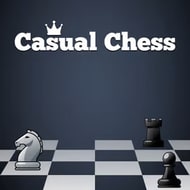





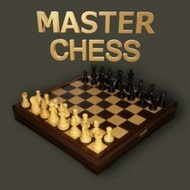
The board loads, both sides are set up exactly the way they’ve been set up for centuries, and Master Chess doesn’t waste time dressing that up with lore or a tutorial you don’t need — you’re given a clean interface, a difficulty choice, and an opponent, and the rest is the same game people have been quietly out-thinking each other with forever.
| Genre | Digital Chess |
| Modes | Versus AI, local two-player, and networked multiplayer |
| Key Feature | Highlighted legal moves for whichever piece is selected |
| Best For | Players who want real chess without extra systems layered on top |
Chess itself needs no introduction, so the honest question with any digital version is what it changes about a game whose rules haven’t moved in centuries. Master Chess keeps things close to the source material rather than reinventing it — no special power-ups, no board variants, just standard rules presented cleanly across versus-AI, local two-player, and networked multiplayer modes. The value here isn’t novelty, it’s accessibility: a clean, responsive board that gets out of the way of the actual thinking.
That restraint is worth appreciating on its own terms. Plenty of browser chess implementations try to differentiate themselves with gimmicks; Master Chess mostly just tries to be a reliable board you can trust, which matters more than it sounds like for a game where a misread square or an ambiguous piece boundary can cost you the position.
Selecting a piece highlights its legal moves directly on the board, which sounds like a small convenience until you’re several moves into a tactical sequence and trying to hold multiple candidate lines in your head at once. That highlighting doesn’t just prevent illegal-move mistakes, it actively supports calculation — seeing a knight’s full move set laid out at a glance makes spotting a fork option far more reliable than trying to visualize the knight’s reach from memory alone.
New players lean on this feature constantly and should; it’s a legitimate aid for learning piece movement patterns rather than a crutch. More experienced players tend to use it differently — as a quick double-check before committing to a move they’d already calculated, rather than as the primary way they’re finding candidate moves in the first place.
Master Chess offers multiple AI difficulty tiers, and the honest advice echoed across player discussion of games like this is to start lower than pride suggests. The AI at even modest settings plays tactically sharper than casual players expect, and a string of quick losses at a harder setting teaches less than a closer, more competitive game at an easier one. Ramping up difficulty only once you’re consistently winning is a slower path, but it’s the one that actually builds real pattern recognition rather than just memorizing that the AI is currently beating you.
Where the AI is predictable in its own way, Master Chess’s multiplayer mode introduces the genuine unpredictability of a human opponent, including timed turns for players who want that added pressure and an option to play without a time limit for anyone easing into the format. That timer choice matters more than it seems: untimed games let a newer player think through a position properly, while timed games start rewarding pattern recognition and faster calculation over pure depth of analysis.
Facing a real opponent also exposes weaknesses the AI never will — human players bluff, play unusual openings on purpose, and occasionally make the kind of instinctive tactical move a pattern-based engine simply wouldn’t consider. That unpredictability is exactly why multiplayer mode feels like a different game from versus-AI, even though the rules underneath are identical.
Because Master Chess doesn’t hold your hand through opening theory, walking in with a few reliable openings memorized pays off immediately. The Italian Game and Ruy Lopez are common, flexible starting points for players developing pieces toward the center with clear plans behind each move. The Sicilian Defense offers a sharper, more combative response for players facing an opening move down the center. The Queen’s Gambit, French Defense, Caro-Kann, King’s Indian Defense, and English Opening round out a set of well-established structures that give a game direction from the very first moves rather than improvising blind.
None of these require memorizing long forced sequences to be useful — knowing the first several moves and the general plan behind an opening is usually enough to avoid the early mistakes that hand an AI or a human opponent an easy advantage before the middlegame has even really started.
Games at this level are rarely decided by deep, forced sequences — they’re decided by one side spotting a tactic the other missed. Forks, particularly knight forks that threaten two pieces simultaneously, are the most common way material gets won outright. Pins and skewers work similarly, exploiting pieces lined up along a rank, file, or diagonal. Discovered attacks and the rarer double check add sudden swings that Master Chess’s move-highlighting can help you spot in advance if you’re actively scanning for them rather than only reacting to your opponent’s last move.
Recognizing these patterns is a skill that transfers directly from the highlighted-move display back into your own visualization over time — the more consistently you check a piece’s highlighted range for fork or pin potential, the less you’ll need the highlight to see it eventually.
Where Master Chess’s clean interface doesn’t do the thinking for you is the endgame, and that’s true of any chess implementation — concepts like the opposition in king-and-pawn endings, or reference positions like the Lucena and Philidor positions in rook endgames, aren’t things a board highlights for you. Zugzwang, where any move available actually worsens your position, is a particularly humbling idea to encounter for the first time in a live game rather than reading about it afterward.
These endgame fundamentals matter more than their subtlety suggests, since a well-played opening and middlegame can still fall apart in a poorly understood endgame, and no amount of move-highlighting substitutes for actually knowing which pawn endings are winning versus which are drawn.
Master Chess doesn’t need to reinvent a game that’s survived centuries of scrutiny — what it offers is a clean board, a genuinely useful highlighted-move system, and enough difficulty range and multiplayer flexibility that the actual chess, forks, pins, and endgame judgment included, gets to stay the star of the experience.
