

War of Dots
Car Eats Car: Winter Adventure
Bomber Royale

Color Switch
Stacktris

Thumb Fighter
War of Dots Unblocked










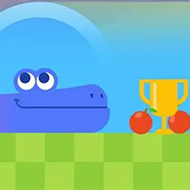
You start with a short pixel snake, one apple on screen, and nothing that looks remotely dangerous. Twenty apples later, in Google Snake, your own body has become the main obstacle, speed has crept up without you noticing, and the red boundary walls that felt distant a minute ago are suddenly one wrong turn away.
| Genre | Arcade / reflex |
| Controls | Arrow keys |
| Apple modes | One, three, or five apples on screen |
| Power-ups | Double Points, Slow-Motion, Invincibility |
The core loop of Google Snake never changes — arrow keys, eat apples, avoid your own tail and the walls — but the game’s actual difficulty curve comes entirely from the fact that every apple eaten increases speed. What beginners get wrong is playing the early, slow section the same way they play the late game: taking wide, careless turns that only become dangerous once the snake’s length and speed have both grown past the point where a wide turn has anywhere safe to land.
Switching from the default single-apple mode to three or five apples on screen changes more than pacing. With multiple apples present, a player has to weigh a longer, riskier detour against a shorter, safer one — the game briefly becomes about route planning instead of pure reaction speed, right up until the snake’s growing body turns that same route into a trap.
Double Points, Slow-Motion, and Invincibility appear randomly rather than on a schedule, which means a lot of players never build a real strategy around them and just grab whatever shows up. That’s a mistake in the late game specifically: Invincibility is the one power-up that lets a snake pass through its own tail without dying, and knowing that a coiled, dangerous position is survivable for a few seconds changes how aggressively a skilled player is willing to route through tight spaces.
Slow-Motion gets undersold by comparison, but it’s the power-up most responsible for high scores late in a run — the handful of seconds it buys are usually the difference between threading a turn cleanly at high speed and clipping your own tail on a turn that would have been trivial a minute earlier.
What keeps Google Snake replayable long after the novelty of a doodle-style snake game wears off is that same rising-speed curve — every run ends the same honest way, with a turn that was safe a minute ago no longer being safe, and the only real fix is seeing it coming a few apples sooner next time.
