


War of Dots

Car Eats Car: Winter Adventure
Bomber Royale

Color Switch

Stacktris

Thumb Fighter
War of Dots Unblocked













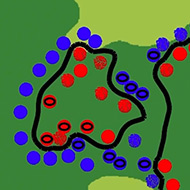

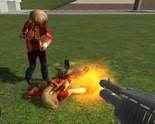
Dmod looks like a joke premise on the surface — a forest overrun by roaming, hostile piles that shouldn’t logically be dangerous — but the survival math underneath it is exactly as serious as any horde shooter, and the timer doesn’t care how silly the enemies look.
| Genre | Survival shooter |
| Setting | A forest overrun with hostile roaming creatures |
| Objective | Survive the timer while thinning the horde |
The instinct in Dmod is to run and avoid contact, treating the forest’s roaming creatures as obstacles to dodge rather than targets to engage. That instinct works early, when numbers are low, and stops working fast once the horde thickens — a player who’s spent the whole run avoiding fights ends up cornered with no space left to retreat into. What beginners get wrong is not engaging early enough, when a creature or two is still an easy, low-risk kill rather than part of a larger cluster.
Killing proactively, rather than reactively, keeps the total roaming population manageable for the rest of the timer. Letting numbers build in a corner of the map you’re not actively watching is the single most common way a run that felt under control suddenly isn’t.
Dmod’s map isn’t uniformly dangerous — certain clusters of terrain tend to funnel roaming creatures into predictable paths, and players who learn those paths can pick off approaching threats before they’re close enough to be a problem. Treating the whole forest as equally risky wastes ammunition and attention on directions nothing was actually approaching from.
Whatever you make of the premise, Dmod plays its survival mechanics completely straight, and that’s exactly why a run that goes wrong still stings the same way any horde shooter’s near-miss does — the timer was always the real opponent, and it doesn’t forgive a slow start.
